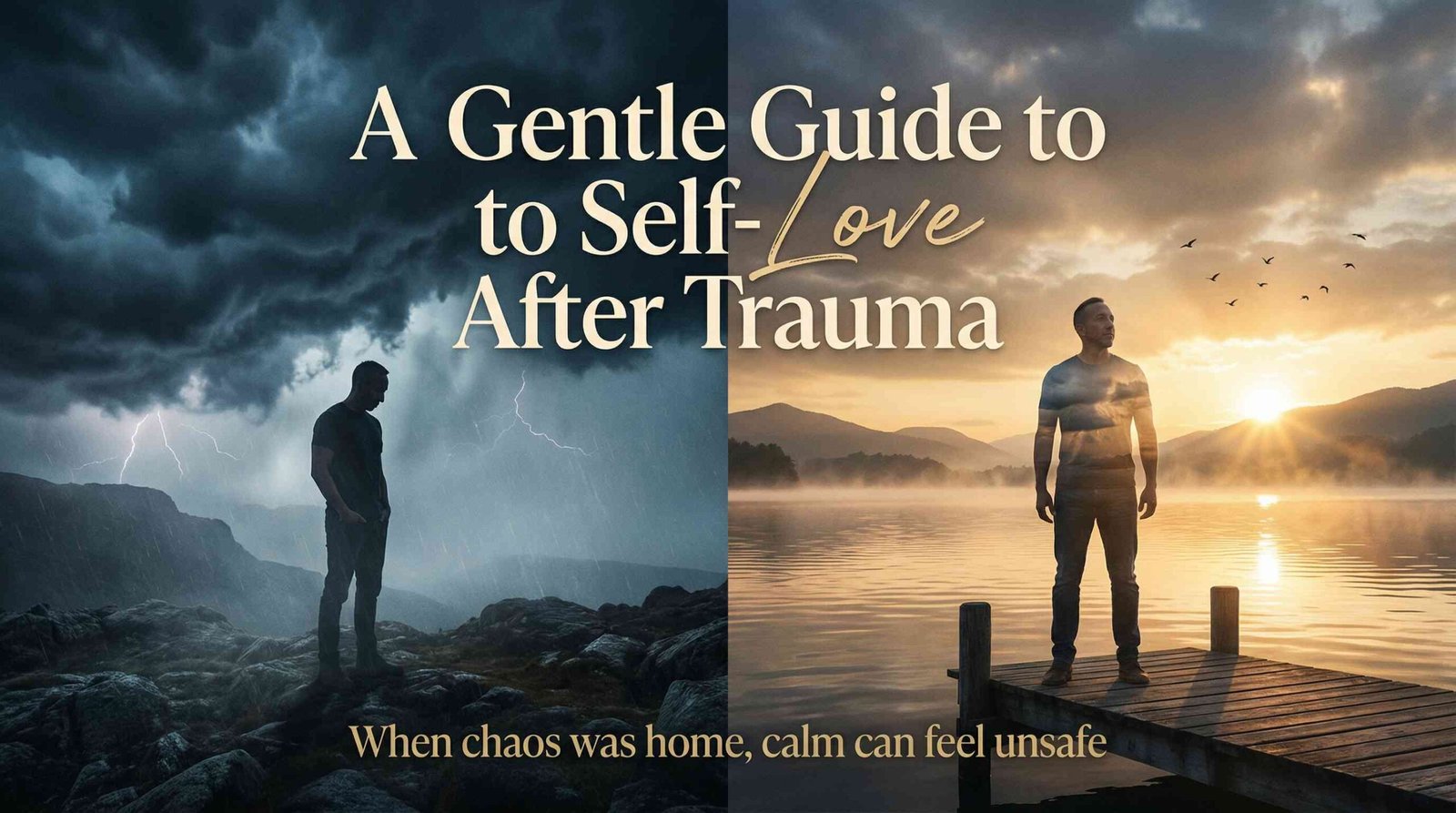
When chaos was home, calm can feel unsafe
If trauma was your normal for a long time, your nervous system learned something important: intensity meant familiarity.
So when life becomes calm, the mind may try to recreate danger internally through overthinking, self-criticism, emotional spirals, or imagined threats.
This does not mean you are broken. It means your system is still learning a new definition of safety.
Self-love at this stage is not about fixing. It’s about retraining familiarity.
1. Understand What’s Actually Happening (No Self-Judgment)
Your brain is doing its job too well.
- Trauma wired your nervous system to stay alert.
- Calm feels unfamiliar, so the mind creates stimulation.
- Internal chaos becomes a substitute for external danger.
Reframe this gently:
“My system is adjusting. I am not going backward.”
Self-love begins when you stop turning a survival reflex into a personal flaw.
2. Separate Peace From Boredom
For trauma survivors, peace can feel like:
- Emptiness
- Lack of identity
- “Something’s missing”
This is normal.
Ask yourself:
- Am I unsafe—or just unstimulated?
- Is this silence, or is it stability?
New mantra:
“Calm is not the absence of life. It is the absence of threat.”
3. Interrupt Internal Trauma Loops With the Body (Not Logic)
You can’t think your way out of a nervous system pattern.
When you notice:
- Racing thoughts
- Emotional spirals
- Imagined conflict
Try body-based grounding instead:
- Put your feet flat on the floor and name 5 physical sensations
- Slow your exhale (longer out-breath tells the body it’s safe)
- Place a hand on your chest and apply gentle pressure
This is self-love in action: meeting your body where it is, not forcing it to “calm down.”
4. Replace Chaos With Chosen Intensity
You don’t need to eliminate intensity.
You need to choose it consciously.
Healthy outlets:
- Strength training, running, cold exposure
- Creative work that absorbs you
- Deep conversations, not emotional drama
- Purposeful challenges with clear boundaries
This teaches your system:
“I can feel alive without being in danger.”
5. Practice Compassionate Witnessing (Daily, Brief)
Once a day, notice your inner state without fixing it.
Say:
- “I see you.”
- “You’re trying to protect me.”
- “We’re safe now.”
No affirmations. No positivity pressure.
Just presence.
This is how trust with yourself is rebuilt.
6. Redefine Self-Love at This Stage
Self-love is no longer:
- Motivation
- Transformation
- Pushing forward
Self-love now looks like:
- Allowing calm without sabotaging it
- Letting joy be simple
- Trusting stability
- Staying when nothing dramatic is happening
The work is quieter now.
That doesn’t make it smaller. It makes it deeper.
Final Truth to Hold Onto
You are not creating internal trauma because you want pain.
You are doing it because peace is new.
And anything new takes time to feel like home.
You’re not losing yourself. You’re meeting yourself without survival armor.
That takes courage.